
Chimpanzee Trekking in Uganda & Rwanda
Chimpanzee trekking is one of East Africa’s most thrilling wildlife experiences, allowing visitors to observe wild chimpanzees in their natural rainforest habitat. Uganda and Rwanda offer some of Africa’s best primate trekking destinations, including Kibale Forest National Park and Nyungwe National Park, where experienced guides lead small groups to habituated chimpanzee communities while supporting conservation and local livelihoods.
Few wildlife encounters compare to hearing the first echoing pant-hoots of a wild chimpanzee troop through the rainforest canopy. Long before you see them, you’ll hear branches shaking, leaves rustling, and excited calls carrying across ancient forests.
As professional safari guides at Solitary Safaris, we have spent more than 15 years leading primate expeditions across Uganda and Rwanda, guiding travelers through lush tropical forests where chimpanzees, mountain gorillas, golden monkeys, and hundreds of bird species thrive.
Unlike traditional game drives, chimpanzee trekking is immersive. You hike beneath towering mahogany trees, cross streams, navigate dense vegetation, and eventually stand just meters away from our closest living relatives as they forage, groom, communicate, and swing effortlessly through the forest.
Whether you are planning your first African safari or combining chimpanzee trekking with gorilla trekking, this comprehensive guide explains everything you need to know for an unforgettable primate adventure in 2026 and 2027.
What Is Chimpanzee Trekking?
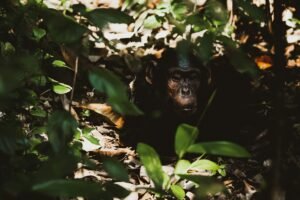
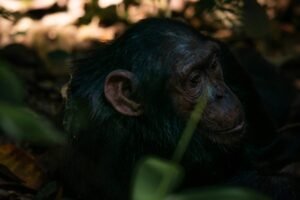
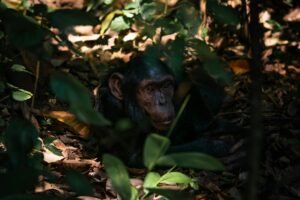
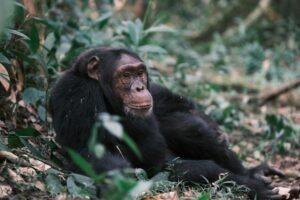
Chimpanzee trekking is a guided wildlife experience where visitors hike through tropical forests to locate habituated communities of wild eastern chimpanzees (Pan troglodytes schweinfurthii). Once found, visitors spend one hour observing their natural behavior while following strict conservation guidelines that protect both chimpanzees and their fragile rainforest habitat.
Unlike visiting animals in captivity, chimpanzee trekking takes place entirely in the wild.
Each trek begins with a briefing from park rangers before experienced trackers locate chimpanzee groups that move freely throughout protected forests.
During your encounter, you may witness chimpanzees:
- Feeding on figs and wild fruits
- Grooming family members
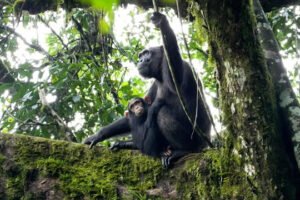
- Caring for infants
- Hunting colobus monkeys (occasionally)
- Building nests
- Displaying social dominance
- Communicating through loud pant-hoots
- Swinging high through the forest canopy
Every trek is different because chimpanzees are wild animals whose movements depend on food availability and seasonal conditions.
Why Chimpanzees Fascinate Scientists
Chimpanzees share approximately 98.7% of human DNA, making them our closest living relatives alongside bonobos.
Researchers continue studying chimpanzees because they:
- Use tools
- Hunt cooperatively
- Form complex social relationships
- Solve problems
- Express emotions
- Care for injured individuals
- Pass knowledge between generations
Watching these behaviors in the wild offers remarkable insight into human evolution.
Pro Tip: Morning treks often provide the most active chimpanzee encounters because communities spend the early hours feeding and communicating before resting during the hotter parts of the day.
Most Popular Chimpanzee trekking Safaris
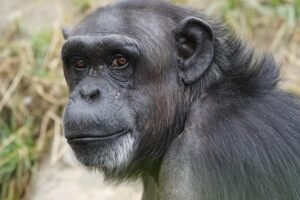
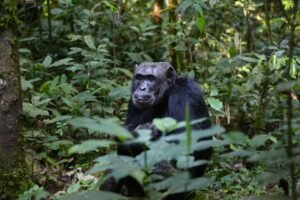
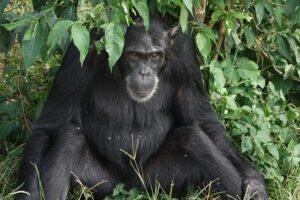
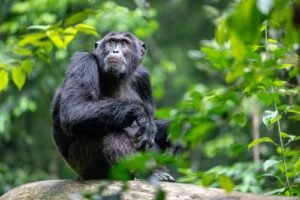
Where Can You Go Chimpanzee Trekking?
Uganda and Rwanda are East Africa’s premier chimpanzee trekking destinations. Uganda offers several exceptional trekking locations including Kibale Forest National Park, Budongo Forest, Kyambura Gorge, and Kalinzu Forest, while Rwanda’s flagship destination is Nyungwe National Park, one of Africa’s oldest montane rainforests.
Best Chimpanzee Trekking Destinations
| Destination | Country | Best For | Success Rate |
| Kibale Forest National Park | Uganda | Best overall chimp trekking | 95%+ |
| Budongo Forest Reserve | Uganda | Smaller groups & photography | Very High |
| Kyambura Gorge | Uganda | Scenic rainforest canyon | Good |
| Kalinzu Forest Reserve | Uganda | Budget trekking | High |
| Nyungwe National Park | Rwanda | Luxury safaris & canopy walk | High |
Each destination offers a different trekking experience, making it possible to tailor your itinerary according to your interests and travel style.
Why Is Kibale Forest National Park the Best Place for Chimpanzee Trekking?
Kibale Forest National Park is widely regarded as Africa’s best destination for chimpanzee trekking due to its large habituated chimpanzee population, exceptionally high sighting success, rich biodiversity, and well-developed tourism infrastructure.
Known as the Primate Capital of the World, Kibale protects more than 1,500 chimpanzees, one of the largest protected populations anywhere.
The park also shelters:
- Red-tailed monkeys
- L’Hoest’s monkeys
- Black-and-white colobus monkeys
- Blue monkeys
- Olive baboons
- Grey-cheeked mangabeys
- Red colobus monkeys
In total, Kibale is home to 13 primate species, making it one of Africa’s richest primate ecosystems.
Bird enthusiasts can also spot more than 375 bird species, including the spectacular African pitta.
Why Travelers Love Kibale
- High chimpanzee encounter rate
- Easy accessibility
- Excellent guides
- Beautiful rainforest scenery
- Ideal for combining with Queen Elizabeth National Park
- Suitable for photographers
Pro Tip: Spend two nights near Kibale rather than one. This allows flexibility if weather conditions affect your first trek and gives time to explore nearby Bigodi Wetland Sanctuary.
Why Visit Nyungwe National Park for Chimpanzee Trekking?
Nyungwe National Park is Rwanda’s premier chimpanzee trekking destination, offering pristine montane rainforest, exceptional biodiversity, and luxury safari experiences. Visitors can combine chimpanzee trekking with the famous Nyungwe Canopy Walk and guided forest hikes.
Nyungwe is one of Africa’s oldest surviving rainforests.
Its biodiversity includes:
- Eastern chimpanzees
- Ruwenzori colobus monkeys
- Owl-faced monkeys
- L’Hoest’s monkeys
- Blue monkeys
- Mona monkeys
- Over 300 bird species
The park’s elevated terrain creates spectacular scenery unlike anywhere else in East Africa.
Many visitors combine chimpanzee trekking with the famous Canopy Walkway, suspended approximately 70 meters above the forest floor.
Pro Tip: Nyungwe mornings are often chilly. A lightweight fleece is invaluable before the trek begins.
Uganda vs Rwanda: Which Country Is Better for Chimpanzee Trekking?
Uganda offers greater diversity, more trekking locations, and exceptional value, while Rwanda provides luxury experiences, shorter travel distances, and combines perfectly with high-end gorilla trekking safaris. The best choice depends on your budget, itinerary, and travel preferences.
| Feature | Uganda | Rwanda |
| Main Destination | Kibale Forest | Nyungwe Forest |
| Number of Trekking Sites | Multiple | One primary site |
| Biodiversity | Excellent | Excellent |
| Luxury Lodges | Excellent | Exceptional |
| Gorilla Trek Combination | Outstanding | Outstanding |
| Scenic Rainforest | Excellent | Excellent |
| Overall Value | Outstanding | Premium |
At Solitary Safaris, many guests choose a combined Uganda-Rwanda itinerary to experience the best of both countries.
What Happens During a Chimpanzee Trek?
A typical chimpanzee trek begins with a ranger briefing before small groups enter the forest with experienced trackers. Treks usually last two to five hours depending on chimpanzee movements, with one unforgettable hour spent observing the animals after they are located.
Your day typically follows this schedule:
- Early breakfast
- Registration at park headquarters
- Ranger briefing
- Guided forest hike
- Locate chimpanzee community
- One-hour observation
- Return hike
- Certificate or park exit
Chimpanzees move quickly through the forest, making each trek active and exciting.
Unlike gorillas, they spend much of their time in trees.
Chimpanzee Trekking vs Gorilla Trekking
Chimpanzee trekking is faster-paced and often involves following active primates through dense rainforest, while gorilla trekking usually ends with observing calm family groups feeding on the forest floor. Many travelers combine both experiences for the ultimate East African primate safari.
| Feature | Chimpanzees | Mountain Gorillas |
| Activity Level | Very Active | Relaxed |
| Habitat | Rainforest Canopy | Montane Forest |
| Observation | Constant movement | Close stationary viewing |
| Trek Difficulty | Moderate | Moderate to Challenging |
| Best For | Active wildlife lovers | Bucket-list safari travelers |
Experiencing both species provides fascinating insight into the diversity of Africa’s great apes.
Chimpanzee Habituation Experience
Chimpanzee habituation allows visitors to spend extended time with researchers and rangers observing chimpanzees as they gradually become accustomed to human presence. Unlike standard trekking, habituation experiences can last several hours and provide deeper insights into chimpanzee behavior and conservation.
This unique experience offers opportunities to observe:
- Morning nest departures
- Feeding behavior
- Social interactions
- Territorial displays
- Scientific monitoring
- Vocal communication
It is ideal for wildlife photographers and travelers seeking a more immersive primate experience.
Best Time for Chimpanzee Trekking
Chimpanzee trekking is available year-round, but the dry seasons from June to September and December to February generally offer easier hiking conditions and improved wildlife viewing.
| Season | Conditions | Recommendation |
| June–September | Dry | Excellent |
| December–February | Dry | Excellent |
| March–May | Wet | Very Good |
| October–November | Wet | Good |
Rainforests remain lush throughout the year, and chimpanzee sightings are consistently high.
What Should You Pack?
Proper clothing and equipment make chimpanzee trekking safer and more enjoyable. Lightweight hiking gear, waterproof protection, and insect defense are essential.
Bring:
- Waterproof hiking boots
- Long trousers
- Long-sleeved shirt
- Rain jacket
- Gardening gloves
- Insect repellent
- Refillable water bottle
- Daypack
- Binoculars
- Camera with telephoto lens
- Extra batteries
Avoid bright clothing and excessive perfume.
Pro Tip: Neutral colors like olive, khaki, and forest green blend naturally into the rainforest and photograph beautifully.
Conservation: Why Chimpanzee Trekking Matters
Responsible chimpanzee trekking directly supports conservation by funding protected areas, ranger patrols, scientific research, habitat restoration, and local community development while creating sustainable alternatives to deforestation and illegal hunting.
Tourism revenue helps support organizations including:
- Uganda Wildlife Authority (UWA)
- Rwanda Development Board (RDB)
- Jane Goodall Institute
- Wildlife Conservation Society (WCS)
- Local community conservation initiatives
Strict visitor regulations, including maintaining safe distances, limiting group sizes, and prohibiting visits by anyone who is ill, help reduce the risk of disease transmission to chimpanzees.
Frequently Asked Questions About Chimpanzee Trekking
Is chimpanzee trekking safe?
Yes. Guided treks are conducted by experienced park rangers who monitor chimpanzee behavior and ensure visitor safety.
How long does chimpanzee trekking take?
Most treks last between 2 and 5 hours, depending on where the chimpanzees are located.
Can children go chimpanzee trekking?
Most parks require participants to be 15 years or older, although regulations may vary by destination.
What is the difference between trekking and habituation?
Standard trekking includes one hour with chimpanzees after they are found, while habituation experiences allow significantly more time observing researchers gradually acclimating chimpanzees to human presence.
Can I combine chimpanzee and gorilla trekking?
Absolutely. One of the most popular East African safari itineraries combines chimpanzee trekking in Kibale Forest National Park with mountain gorilla trekking in Bwindi Impenetrable National Park or Volcanoes National Park, offering an unforgettable journey through the region’s most iconic primate habitats.
Why Choose Solitary Safaris for Your Chimpanzee Trekking Adventure?
At Solitary Safaris, we believe chimpanzee trekking is far more than a wildlife activity—it’s a chance to connect with one of humanity’s closest relatives while contributing to the conservation of East Africa’s remarkable rainforests.
With more than 15 years of guiding experience across Uganda and Rwanda, our team designs personalized primate safaris that combine expert local knowledge, responsible tourism, and seamless travel planning. Whether you dream of tracking chimpanzees in Kibale Forest National Park, exploring the ancient rainforest of Nyungwe National Park, or combining chimpanzee trekking with unforgettable encounters with mountain gorillas, golden monkeys, and the Big Five, we’ll create an itinerary tailored to your interests.
Start planning your 2026 or 2027 chimpanzee trekking safari today with Solitary Safaris and experience the incredible intelligence, energy, and social lives of wild chimpanzees in the forests where they truly belong.