
What Is the Best Safari in Uganda?
September 22, 2026Best Time to Visit Queen Elizabeth National Park
September 25, 2026Best Time to Visit Murchison Falls National Park
The best time to visit Murchison Falls National Park is generally December to February and June to September. These drier periods make wildlife easier to spot, improve road conditions and provide excellent conditions for Game Drives and Nile boat cruises.
Murchison Falls is open for visitors throughout the year.
You can therefore plan a safari in any month.
However, different seasons create different experiences.
During the drier months, animals often concentrate around the Nile and other reliable water sources.
Grass can also be shorter, making wildlife easier to see.
During wetter periods, the landscape becomes greener and more dramatic.
Birdlife can also be particularly rewarding.
Uganda Wildlife Authority identifies December to late February and June to September as the best general periods to visit Murchison Falls because animals become more concentrated around water points.
At Solitary Safaris, we therefore recommend choosing your travel month according to your main objective.
Do you want the easiest wildlife viewing?
Are you interested in birding?
Do you prefer greener scenery and potentially quieter conditions?
Or are you combining Murchison Falls with gorilla trekking in Bwindi or Rwanda?
The answer can change the ideal month.
Pro-Tip: If classic wildlife viewing is your priority, consider December–February or June–July. June and July can offer a useful balance of drier weather and slightly lower daytime heat.
When Is the Best Time to Visit Murchison Falls?
For the clearest combination of wildlife viewing and relatively dry conditions, December to February and June to September are the main periods to consider. June and July are particularly attractive for travelers who prefer drier weather without the hottest conditions of January and February.
Murchison Falls has a hot tropical climate. Its temperatures remain relatively warm throughout the year. Rainfall creates the bigger seasonal difference.
| Period | Conditions | Wildlife Viewing | Visitor Levels | Best For |
| December–February | Dry and hot | Excellent | Higher | Game Drives |
| March–May | Wetter | Good | Lower | Green scenery, budget trips |
| June–July | Relatively dry | Excellent | Higher | Wildlife and comfortable safari |
| August–September | Wetter but variable | Good | Moderate | Wildlife, birding |
| October–November | Wetter | Good | Lower | Green scenery, birding |
| December | Drying | Excellent | Increasing | Wildlife and holidays |
SafariBookings similarly identifies December to February as the easiest period for wildlife spotting, while June and July are relatively dry and somewhat cooler during the day.
Pro-Tip: Do not assume that “wet season” means poor safari conditions. Murchison is relatively dry compared with several other parts of Uganda, and wildlife viewing remains possible throughout the year.

Best Time to Visit Murchison Falls
Murchison Falls Dry Season: December to February
December to February is one of the best periods for a Murchison Falls Wildlife Safari. Rainfall is limited, vegetation is generally less dense and wildlife tends to concentrate around permanent water sources such as the Victoria Nile.
This is the classic dry-season safari experience.
- The grass becomes less dense.
- Water becomes more important to wildlife.
- Animals can therefore become easier to locate during Game Drives.
- The weather is also generally sunny.
- However, there is an important trade-off.
January and February can be hot.
Uganda Wildlife Authority’s climate information describes Murchison Falls as hot during the dry season, while climate data indicates daytime temperatures can reach around 30–32°C and sometimes higher.
- That means early mornings are particularly valuable.
- We prefer starting Game Drives early.
- Wildlife is often more active before the strongest midday heat.
Why Visit in December?
- December marks the beginning of the drier period.
- The landscape can still retain some greenery from preceding rains.
- This can create a pleasing balance between scenery and wildlife visibility.
- It is also a popular holiday period.
Why Visit in January?
- January is typically dry and sunny.
- Wildlife viewing can be excellent.
- However, temperatures can be high.
- Pack breathable clothing and drink plenty of water.
Why Visit in February?
- February remains dry and warm.
- Animals may remain concentrated around water.
- For travelers prioritizing wildlife photography, this can be an attractive period.
Pro-Tip: Book early if you want a Christmas, New Year or peak January safari. Accommodation demand can increase during popular holiday periods.
Murchison Falls in June and July
June and July offer some of the most attractive conditions for a Murchison Falls safari. The weather is generally drier than the wetter months, daytime temperatures are somewhat more comfortable, and wildlife viewing remains strong.
This period deserves special attention.
While December to February is traditionally regarded as the main dry season, June and July can provide a slightly different experience.
SafariBookings identifies June and July as relatively dry and somewhat cooler than the hottest part of the year.
That can make long Game Drives more comfortable.
It also works well for travelers combining Murchison Falls with other Uganda destinations.
For example:
Murchison Falls → Kibale → Queen Elizabeth → Bwindi
This route combines savannah wildlife, chimpanzee trekking and gorilla trekking.
Why Choose June?
June begins a drier period after the March–May rains.
Road conditions can improve.
Wildlife viewing is generally strong.
Why Choose July?
July remains relatively dry.
Temperatures are generally manageable.
It is a popular month for Uganda Safari Holidays.
Pro-Tip: If you want a drier Murchison Falls safari but are concerned about the heat of January and February, June or July can be a useful alternative.
Is August a Good Month to Visit Murchison Falls?
August can still be a good month to visit Murchison Falls, although rainfall becomes more variable. Wildlife viewing remains possible, and the park’s relatively dry northern environment means rain does not automatically disrupt an entire safari.
The season becomes wetter from August onward.
However, rainfall patterns are not uniform.
You may experience:
- Sunny mornings
- Short afternoon showers
- Heavy thunderstorms
- Green landscapes
- Muddy sections after substantial rain
SafariBookings notes that Murchison’s wetter months generally do not prevent wildlife viewing, although minor roads can become difficult after heavy downpours.
For flexible travelers, this can still be a rewarding month.
Pro-Tip: If traveling in August, choose a safari vehicle with good ground clearance and work with an experienced guide who understands current road conditions.
Is September a Good Time to Visit Murchison Falls?
September remains a viable month for a Murchison Falls safari. Conditions can be wetter than June or July, but wildlife viewing remains good, and the park’s landscapes can become increasingly green.
September is useful for travelers who prefer fewer rigid expectations around weather.
A typical safari could include:
- Morning Game Drives
- Afternoon rest
- Nile boat cruise
- Evening wildlife viewing where permitted
- Birdwatching
- Cultural experiences
Heavy rainfall can occasionally affect minor roads.
However, rain does not necessarily mean a lost safari day.
In many cases, showers are temporary.
Pro-Tip: Build flexibility into your itinerary. If heavy rain affects one activity, your guide can adjust the timing when conditions permit.
Murchison Falls Wet Season: March to May
March to May is part of Murchison Falls’ wetter period. The landscape becomes greener, birding can be rewarding and visitor numbers may be lower. However, heavy storms can make some tracks muddy and wildlife may spread into areas with fresh vegetation.
The wet season offers a different safari atmosphere.
- The landscape looks vibrant.
- Grass and vegetation grow quickly.
- Bird activity can be impressive.
- Photographers can benefit from dramatic skies and rich landscapes.
- But wildlife viewing becomes less predictable.
- Animals have access to more water.
- They may therefore spread over a larger area.
UWA’s Murchison Falls information notes that the park receives relatively low rainfall overall, although rainfall can arrive in torrential storms.
April and May
These are among the wetter months.
Safari roads can become slippery.
Some tracks may become challenging after substantial rainfall.
This is particularly important for Walking Safaris and other activities requiring movement away from main roads.
Pro-Tip: If you travel during the wet season, prioritize an experienced safari operator and a capable 4×4 vehicle.
Is Murchison Falls Worth Visiting During the Rainy Season?
Yes. A rainy-season Murchison Falls safari can still be worthwhile, particularly for travelers who value green scenery, birding, fewer visitors and potentially lower accommodation rates. Wildlife viewing remains possible throughout the year.
Murchison is not a park that simply “closes” during rain.
SafariBookings rates wildlife viewing as good throughout the year.
The main difference is predictability.
During dry periods:
Animals + water sources + thinner vegetation = easier viewing
During wetter periods:
Green vegetation + more water + dispersed wildlife = more variable viewing
Neither experience is inherently the same.
That distinction matters when choosing your travel dates.
Pro-Tip: If you are comfortable with occasional rain and want lush scenery, do not automatically exclude March–May or October–November.
Best Time for Wildlife Viewing in Murchison Falls
December to February and June to August are generally the strongest periods for wildlife viewing in Murchison Falls. Animals often concentrate around the Nile and other water sources, while reduced vegetation can make sightings easier.
Murchison supports an impressive range of wildlife.
Depending on location and season, you may encounter:
- Elephants
- Lions
- Buffaloes
- Rothschild’s giraffes
- Uganda kob
- Jackson’s hartebeest
- Hippos
- Nile crocodiles
- Waterbuck
- Oribi
- Warthogs
- Leopards
Wildlife sightings are never guaranteed.
That is an important part of responsible safari planning.
SafariBookings notes that elephants, giraffes, buffaloes, lions and hippos are among the notable wildlife in Murchison Falls, while the Victoria Nile supports crocodiles, hippos and waterbirds.
Pro-Tip: Early morning Game Drives are particularly valuable. Avoid judging the entire safari by one drive because wildlife movement changes throughout the day.
Best Time for Game Drives in Murchison Falls
The dry season is generally the easiest period for Game Drives because roads are more accessible and vegetation is less dense. Early morning and late afternoon drives can also offer better wildlife activity than the hottest part of the day.
A typical day might look like:
6:00 AM: Early morning Game Drive
9:30 AM: Return to lodge for breakfast
Afternoon: Relaxation or lunch
2:00 PM: Nile boat cruise
Evening: Return to lodge
Your exact schedule depends on the lodge, activity and park regulations.
UWA emphasizes responsible driving inside Murchison Falls and has published a 40 km/h speed limit within the park, alongside rules against unnecessary stops, feeding wildlife and hooting.
Pro-Tip: A knowledgeable guide matters as much as the month. Guides understand tracks, recent sightings, road conditions and animal behavior.
Best Time for the Murchison Falls Nile Boat Cruise
The Nile boat cruise is a year-round activity, and the dry season can provide especially clear conditions for viewing wildlife along the river. Water levels and weather can still vary, so your operator should confirm the latest conditions.
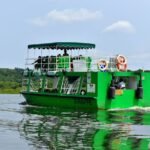
The boat cruise is one of the defining Murchison Falls experiences. The journey follows the Victoria Nile toward the base of the waterfall.
Along the banks, you may see:
- Hippos
- Nile crocodiles
- Elephants
- Buffaloes
- Waterbuck
- Antelope
- Kingfishers
- Herons
- Fish eagles
- Other waterbirds
The river creates a different wildlife-viewing perspective. You are not simply looking across a grassland.
You are observing the park from the water.
Pro-Tip: Combine the boat cruise with a morning Game Drive. The two activities offer very different wildlife-viewing opportunities.
Best Time for Bird Watching in Murchison Falls
January to March is particularly attractive for birdwatching in Murchison Falls, while birding remains rewarding throughout the year. Migratory species are generally present from November to April, adding seasonal interest.
Murchison Falls is one of Uganda’s important birding destinations.
Potential sightings include:
- Shoebill
- Goliath heron
- Giant kingfisher
- Malachite kingfisher
- Osprey
- Denham’s bustard
- Black-headed gonolek
- Red-throated bee-eater
- White-crested turaco
SafariBookings identifies January to March as a particularly good period for birding in Murchison Falls and notes that migratory birds are present from November to April.
UWA also identifies Murchison Falls as an excellent location for seeing a wide range of bird species, including the sought-after shoebill.
Pro-Tip: If birding is your priority, tell us before booking. We can build additional time for specialized birding rather than treating it as an incidental activity.
Best Time for Photography in Murchison Falls
Murchison Falls offers photographic opportunities throughout the year, but dry-season wildlife concentration and wet-season greenery create different visual styles. The best month depends on whether you prioritize wildlife encounters, landscapes, birds or dramatic skies.
Dry-season photography
You can expect:
- Clearer skies
- Easier wildlife spotting
- Dusty golden landscapes
- Animals around water
- Strong sunrise and sunset opportunities
Wet-season photography
You may get:
- Rich green vegetation
- Dramatic clouds
- Rainbows
- Fresh landscapes
- Migratory birds
- Young animals in some periods
Neither season guarantees a specific photographic encounter. Wildlife remains unpredictable.
Pro-Tip: Carry a versatile telephoto lens for wildlife and a wider lens for landscapes and the falls.
Best Time for Walking Safaris in Murchison Falls
Walking activities are possible in and around the Murchison Falls area, but conditions vary by trail, season and authorized activity. Drier weather generally makes trails easier, while wet-season conditions can produce mud and slippery surfaces.
Walking gives you a completely different perspective.
Instead of focusing only on large mammals, you can notice:
- Animal tracks
- Plants
- Insects
- Bird calls
- Smaller wildlife
- Landscape details
However, walking in a protected area should always be conducted through authorized guides and according to park regulations.
UWA’s visitor management framework places wildlife protection and visitor safety at the center of activities.
Pro-Tip: If Walking Safaris or Walking Tours are important to your trip, tell us when planning. We can select suitable activities based on current conditions.
Best Time for Family Safaris in Murchison Falls
Family-Friendly Safaris can work throughout the year, but drier periods may be easier for families because road conditions are generally more predictable. Shorter Game Drives, boat cruises and comfortable lodge stays can help create relaxed Family Holidays.
For Family Tours, we consider:
- Children’s ages
- Driving distances
- Accommodation
- Meal requirements
- Activity duration
- Rest periods
- Weather
- Park regulations
Murchison works well because it offers more than Game Drives.
Families can combine:
Game Drives + Nile Cruise + Waterfall Visit + Rhino Tracking
The variety can keep younger travelers engaged.
Pro-Tip: Avoid scheduling long drives immediately before or after several major activities. A slower Family Trip often creates better memories.
Best Time for a Luxury Safari in Murchison Falls
Luxury Safari Holidays can be enjoyed throughout the year, but June to September and December to February are popular because of favorable wildlife-viewing conditions. The best luxury itinerary combines excellent guiding with carefully located accommodation.
Luxury does not simply mean an expensive lodge.
The location matters.
A lodge close to your activities can reduce transfer time.
A private vehicle provides flexibility.
A private guide can adjust the pace around your interests.
A luxury Murchison Falls itinerary might include:
- Private 4×4
- Luxury lodge
- Private guide
- Morning Game Drives
- Nile cruise
- Birding
- Cultural activities
- Rhino tracking
- Scenic waterfall experiences
Pro-Tip: For a premium safari, spend more on location, guiding and time in the park before adding unnecessary extras.
Murchison Falls Weather Month by Month
Murchison Falls remains warm throughout the year, with the main differences coming from rainfall. December to February is generally dry, March to May becomes wetter, June and July are relatively dry, and August to November brings more variable rainfall.
| Month | Weather Pattern | Safari Conditions |
| January | Dry and hot | Excellent wildlife viewing |
| February | Dry and hot | Excellent wildlife viewing |
| March | Increasing rain | Good, greener landscapes |
| April | Wet | Good but muddy after heavy rain |
| May | Wet | Good, lush scenery |
| June | Relatively dry | Excellent |
| July | Relatively dry | Excellent |
| August | Variable rain | Good |
| September | Variable rain | Good |
| October | Wet | Good, lush scenery |
| November | Wet | Good, birding opportunities |
| December | Drying | Excellent |
UWA climate information describes the main dry seasons as December–February and June–September, with wet seasons generally occurring around March–May and October–November.
Climate patterns can vary from year to year.
Therefore, use this table as a planning guide rather than a weather guarantee.
Best Time to Combine Murchison Falls With Bwindi Gorilla Trekking
June to August and December to February are practical periods for combining Murchison Falls with gorilla trekking in Bwindi, because they generally offer favorable wildlife conditions in Murchison and relatively dry trekking conditions in southwestern Uganda.
A popular itinerary is:
Entebbe → Murchison Falls → Kibale → Queen Elizabeth → Bwindi
This gives you:
- Murchison Game Drives
- Nile boat cruise
- Chimpanzee trekking
- Queen Elizabeth wildlife
- Bwindi gorilla trekking
It is a comprehensive Uganda Wildlife Safari.
However, it requires sufficient time.
We normally recommend avoiding an itinerary that attempts to cover too many parks in too few days.
Pro-Tip: Allow at least two nights around major wildlife destinations. It gives you time for both planned activities and unexpected wildlife opportunities.
Can You Combine Murchison Falls With Rwanda?
Yes. Murchison Falls can be combined with Rwanda, particularly for travelers who want Uganda’s savannah wildlife followed by gorilla trekking in Rwanda’s Volcanoes National Park. The route requires careful planning around road transfers, border procedures and available flights.
A regional itinerary could look like:
Murchison Falls → Kibale → Bwindi → Rwanda
Or:
Murchison Falls → Bwindi → Kigali → Volcanoes National Park
Rwanda’s official tourism authority identifies Volcanoes National Park as the country’s main mountain-gorilla trekking destination.
The advantage of a Uganda-Rwanda journey is diversity.
You can combine:
Savannah + Nile + Chimpanzees + Gorillas + Volcanoes
Pro-Tip: Verify current border and entry requirements before travel. Cross-border arrangements can change.
Which Other Trip Can Be Combined With Tanzania Safari in East Africa?
Murchison Falls can form part of a broader East African itinerary that includes gorilla trekking in Uganda or Rwanda before continuing to Tanzania. A longer journey can combine Uganda wildlife, Bwindi gorillas, Serengeti Game Drives, Ngorongoro and Zanzibar.
This is where the search query “Which Other Trip Can Be Combined with Tanzania Safari in East Africa?” becomes relevant.
One possible route is:
Uganda + Tanzania
Murchison Falls → Kibale → Bwindi → Serengeti → Ngorongoro → Zanzibar
This is an ambitious itinerary.
It works best with additional travel days.
A shorter version could be:
Bwindi → Serengeti → Ngorongoro → Zanzibar
Another option is:
Rwanda + Uganda + Tanzania
Kigali → Volcanoes → Bwindi → Murchison Falls → Serengeti
This is suitable for travelers planning a longer East African Safari Holiday.
The key is to avoid unnecessary backtracking.
Pro-Tip: When combining countries, prioritize efficient flight routing. A cheaper-looking overland connection can sometimes consume an entire day.
What Should You Pack for Murchison Falls?
Pack lightweight clothing, comfortable walking shoes, sun protection, insect repellent, a reusable water bottle and a light waterproof layer. Your exact packing list should reflect the season and activities included in your itinerary.
Essential items
- Lightweight shirts
- Long trousers
- Comfortable walking shoes
- Hat
- Sunglasses
- Sunscreen
- Insect repellent
- Waterproof jacket
- Lightweight fleece
- Binoculars
- Camera
- Spare batteries
- Power bank
- Reusable water bottle
- Personal medication
For wet-season travel, waterproof protection becomes more important. For January and February, prioritize sun protection.
Pro-Tip: Neutral-colored clothing works well for wildlife viewing and photography. Avoid relying on one heavy jacket because Murchison can become very warm.
How Long Should You Spend in Murchison Falls?
We recommend at least three days for a focused Murchison Falls safari. This usually provides enough time for Game Drives, the Nile boat cruise and the waterfall experience without rushing through the park.
A three-day structure could look like:
Day 1
Kampala or Entebbe → Murchison Falls.
Day 2
Morning Game Drive → Nile boat cruise.
Day 3
Morning Game Drive → departure.
With four days, you can add:
- Additional Game Drive
- Ziwa Rhino Sanctuary
- Budongo Forest
- Birding
- Cultural experience
Longer stays allow more flexibility.
Pro-Tip: If wildlife photography is your priority, consider adding an extra morning rather than squeezing more destinations into the itinerary.
Is There a Bad Time to Visit Murchison Falls?
There is no single “bad” month for Murchison Falls because the park offers year-round wildlife viewing. However, April–May and some periods from August–October can bring heavier rainfall, which may affect minor roads and outdoor activities.
SafariBookings identifies April–May and August–October among the wetter periods, while noting that rain seldom prevents an entire safari.
Therefore, your decision should depend on priorities.
If you want the easiest wildlife viewing:
Choose a drier period.
If you want lush scenery and fewer visitors:
Consider wetter months.
If birding is your priority:
Consider January–March or the broader migratory period.
If your budget is the priority:
Ask about lower-season accommodation and safari rates.
Why Choose Solitary Safaris for Murchison Falls?
We plan Murchison Falls Safaris around the season, wildlife priorities, accommodation preferences and available travel time. Our goal is to create a practical East African safari rather than simply placing destinations on a map.
We can arrange:
- Murchison Falls Wildlife Safaris
- Private Game Drives
- Nile boat cruises
- Birding Safaris
- Rhino tracking combinations
- Family-Friendly Safaris
- Luxury Safari Holidays
- Budget Safaris
- Walking experiences
- Uganda-Rwanda itineraries
- Uganda-Tanzania combinations
- Multi-country East African Tours
We also consider the details that can change your experience.
- The lodge location matters.
- The season matters.
- The timing of Game Drives matters.
- Your vehicle matters.
- And the experience of your guide matters.
UWA manages Uganda’s protected areas and provides official visitor regulations for Murchison Falls. Visitors should follow park rules, including speed limits and wildlife-viewing requirements.
Pro-Tip: Always confirm current park regulations, road conditions and activity availability with your safari operator or UWA before departure.

Best Time to Visit Murchison Falls
Final Answer: What Is the Best Time to Visit Murchison Falls?
The best time to visit Murchison Falls for straightforward wildlife viewing is December to February and June to September. June and July are particularly attractive for travelers seeking relatively dry conditions without the strongest heat of January and February.
However, the best month depends on your safari goals.
- For wildlife: December–February and June–August.
- For comfortable dry-season conditions: June–July.
- For birding: January–March is particularly productive.
- For green scenery: March–May and later wet-season months.
- For quieter travel: Consider the wetter periods.
- For families: Choose months with more predictable road conditions.
- For gorilla combinations: December–February and June–August can work well for a Murchison Falls and Bwindi itinerary.
Murchison Falls is rewarding because it combines several experiences in one protected area.
- You can watch elephants on a Game Drive.
- You can cruise along the Nile.
- You can stand above the powerful Murchison Falls.
- You can search for the shoebill.
- You can add rhino tracking.
- You can continue south toward Kibale and Bwindi.
Or you can extend the journey into Rwanda, Kenya or Tanzania.
Plan Your Murchison Falls Safari With Solitary Safaris
Ready to experience Murchison Falls?
Let us design your itinerary around the season, wildlife interests, accommodation style and available time.
Whether you want a family-friendly Wildlife Safari, luxury Safari Holiday, birding adventure, Walking Safari or a wider East African journey combining Murchison Falls with gorilla trekking in Bwindi, Rwanda or a Tanzania safari, we can create a route that makes geographical and practical sense.
Contact Solitary Safaris today and let us plan your Murchison Falls adventure.
